
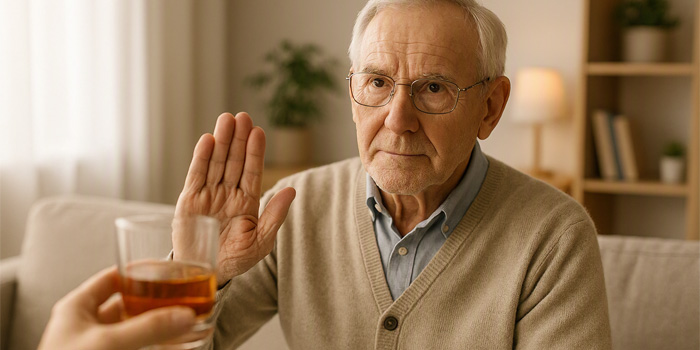
Most older adults grew up hearing the same message: a little alcohol is harmless — maybe even good for the heart. That belief stuck around for decades, but modern research has quietly and firmly overturned it. Today, the data point in one direction: for seniors, alcohol increases the risk of cancer and heart disease, even at low levels.
As one researcher put it, “Studies have shown an increased cancer risk even with consumption of less than one drink per day.”
This is not about scare tactics. It’s about clarity — and helping family caregivers understand the real risks behind a habit many seniors assume is safe.
The Myth of “Harmless” Drinking After 60
A surprising number of older adults still believe moderate drinking protects the heart. But those early studies were flawed, and newer research has corrected the record.
A recent Gallup poll found that less than 40% of adults over 55 believe alcohol is bad for their health, compared to nearly 70% of younger adults. Seniors simply aren’t hearing the updated science.
What the New Research Shows
A major study published in JAMA Network followed more than 135,000 adults over age 60 for 12 years. The results were blunt:
- Seniors drinking more than two drinks per day (men) or more than one per day (women) had a 39% higher risk of dying from cancer and a 21% higher risk of dying from heart disease.
- Even those averaging just under one drink per day had an 11% higher cancer‑death risk.
- Cancer risks rose as low as three to six drinks per week.
Certain cancers showed especially strong links:
- Oral and esophageal cancers
- Breast cancer (even at less than one drink per day)
- Colorectal cancer (moderate to heavy drinking)
- Pancreatic and liver cancers (heavy drinking)
The article notes: “There is a significant relationship to cancer with intake as low as three to six drinks per week.”
Why Seniors Are More Vulnerable
Aging bodies process alcohol differently:
- Slower metabolism
- More medication interactions
- Higher likelihood of chronic conditions
- Greater sensitivity to dehydration and falls
The study also found that occasional drinkers with long‑term health problems had higher cancer risks than healthier occasional drinkers.
The Heart Health Myth is Gone, Too
For years, people believed a daily glass of wine protected the heart. Newer research shows the opposite: even moderate drinking increases cardiovascular risk.
The CDC now advises: If you don’t drink, don’t start. And if you do drink, understand that “moderation” is not protective — it still carries measurable risk.
So, Is There a Safe Amount?
According to the experts quoted in the article, probably not.
Per JAMA Network, “There is probably no ‘safe dose’ of alcohol, and it would be best to avoid alcohol completely to decrease cancer risk.”
That doesn’t mean a senior can never toast at a wedding. But it does mean caregivers should understand the real math behind the habit.
How to Talk About This with Seniors
Many older adults:
- Don’t know the updated research
- Believe alcohol helps them relax
- See drinking as part of social identity
- Don’t feel personally at risk
A helpful approach:
- Keep the tone non‑judgmental
- Focus on health percentages, not morality
- Emphasize that the science has changed
- Offer alternatives for relaxation or socializing
- Encourage them to talk with their doctor
This isn’t about taking away pleasure — it’s about giving them the facts they were never told.
Bottom Line for Caregivers
Alcohol is not harmless for seniors. It’s not heart‑healthy. And even small amounts increase cancer risk.
The percentages are clear — and they’re not in alcohol’s favor.