
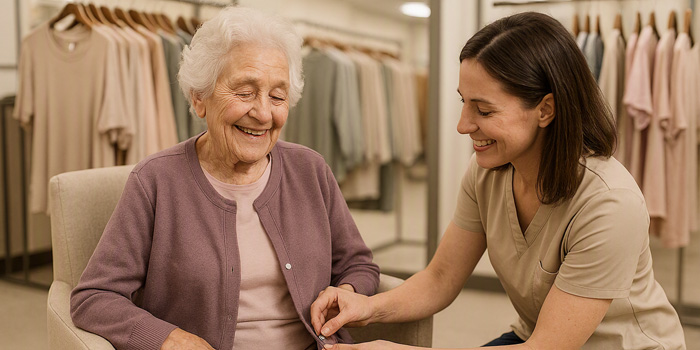
For many older adults, getting dressed is more than a daily routine—it’s a moment of independence, identity, and comfort. Yet arthritis, limited mobility, neuropathy, or cognitive changes can turn buttons, zippers, and stiff fabrics into genuine barriers. Adaptive clothing bridges that gap, blending thoughtful engineering with modern style so seniors can dress with confidence and ease.
Adaptive Clothing Features
The most familiar adaptive features—Velcro shoes, magnetic closures, elastic waistbands—are only the beginning. Today’s designers are rethinking clothing from the ground up, focusing on dignity, comfort, and personal expression. Brands like Tommy Hilfiger Adaptive, Target’s Universal Thread Adaptive, and Zappos Adaptive have helped normalize the idea that functional clothing can still look sharp, colorful, and contemporary. These lines often include hidden magnetic buttons, side‑zip pants, easy‑on sneakers, and soft fabrics that stretch without losing shape.
But adaptive clothing isn’t just about convenience. It’s about reducing frustration. For seniors with arthritis, large zipper pulls or magnetic closures eliminate painful pinching motions. For those with limited shoulder mobility, open‑back tops or wide‑arm garments make dressing safer and less tiring. For individuals with sensory sensitivities, tagless seams and ultra‑soft fabrics prevent irritation that can escalate into agitation.
Switch to Adaptive Clothing Overnight
Caregivers play a crucial role in helping seniors explore these options. The goal is not to “switch” someone to adaptive clothing overnight. It’s to introduce pieces that solve real problems. A cardigan with magnetic buttons may help someone who struggles with fine motor skills. A pair of slip‑resistant, easy‑on shoes may help someone who fatigues easily when bending over. A dress with a side‑zip closure may allow a senior to dress independently for the first time in months.
And adaptive fashion doesn’t have to mean buying an entirely new wardrobe. Many caregivers use DIY hacks to modify existing clothing:
- Sew-in magnetic closures behind decorative buttons
- Replace small zipper pulls with large loops or key‑ring style tabs
- Add Velcro strips to shoes that originally used laces
- Convert pants to elastic waistbands using simple sewing techniques
- Use fabric tape to shorten hems without a full alteration
- Add side snaps to sleeves for easier arm insertion
These small adjustments can make familiar clothing easier to wear while preserving the senior’s personal style.
Adaptive Clothing – Function and Fashion
The heart of adaptive fashion is respect. Clothing should never feel medical or infantilizing. It should feel like “them”—their colors, their patterns, their preferences—just easier. When caregivers help seniors choose adaptive pieces, they’re not just solving a practical problem. They support autonomy, comfort, and self‑expression.
Adaptive clothing proves that function and fashion can coexist beautifully. With thoughtful choices and a few clever modifications, seniors can enjoy clothing that fits their bodies, their abilities, and their sense of self.