
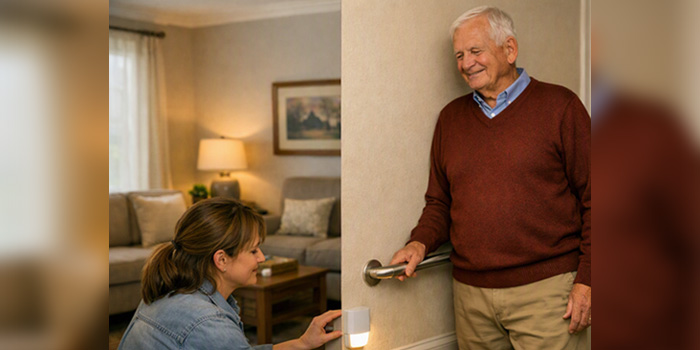
Living alone can be a source of pride for many seniors. It represents independence, familiarity, and the comfort of staying in their own home. But it also brings real safety concerns that families must address thoughtfully. The goal isn’t to take away independence — it’s to create an environment where seniors can live confidently, securely, and with the right support.
Start with a Home Safety Walkthrough
Before making any changes, walk through the home with fresh eyes. Look for tripping hazards, poor lighting, cluttered pathways, and unstable furniture. Seniors often adapt to their environment without noticing risks, so a family member’s perspective is invaluable. Remove loose rugs, secure cords, and ensure that frequently used items are within easy reach.
This is also the time to identify where simple smart tools can help. Motion sensors, door‑open sensors, or temperature alerts can quietly notify family members if something seems off — without adding clutter or requiring the senior to manage new technology.
Improve Lighting Everywhere
Good lighting is one of the simplest and most effective safety upgrades. Seniors need bright, even lighting in hallways, bathrooms, and bedrooms. Motion‑activated nightlights are especially helpful because they eliminate fumbling for switches in the dark.
Smart bulbs can take this a step further. Lights that turn on automatically at sunset or respond to voice commands create a predictable environment that reduces fall risk and helps seniors feel more secure when moving around at night.
Make the Bathroom Safer
Bathrooms are high‑risk areas, but small changes make a big difference. Install grab bars near the toilet and inside the shower. Add a non‑slip mat and consider a shower chair if balance is a concern. If the senior uses medications that cause dizziness, these upgrades become even more important. Families should also check water temperature settings to prevent accidental scalding.
Smart tools can help here as well. A water‑overflow sensor can alert family members if a tub or sink is left running, and a voice‑activated smart speaker in the bathroom allows the senior to call for help without needing to reach a phone.
Set Up a Reliable Emergency System
Every senior living alone needs a way to call for help quickly. This can be a medical alert device, a smartwatch with emergency features, or even a simple phone placed in easy‑to‑reach locations. The key is consistency: the senior must know how to use the device and feel comfortable with it.
A smart speaker can also be a powerful safety tool. Devices like Alexa or Google Home allow a senior to call for help, contact a family member, or check their schedule using only their voice — no need to reach a phone or navigate screens. Simple commands such as “Call John,” “Set a reminder for my medication,” or “Help” give seniors a sense of control and reduce anxiety during moments when mobility or balance is limited.
Simplify Daily Routines
Complex routines can lead to mistakes or accidents. Families can help by organizing medications, preparing easy‑to‑heat meals, and setting up reminders for hydration, appointments, and daily tasks. A predictable routine reduces stress and helps seniors stay on track without feeling overwhelmed.
Smart pill dispensers, hydration reminders, and voice‑activated calendars can support independence without requiring the senior to manage complicated technology.
Check In Regularly — Without Hovering
Seniors value independence, but they also appreciate knowing someone is paying attention. Establish a check‑in schedule that feels supportive rather than intrusive. A quick morning text, an evening phone call, or a video chat every few days can provide reassurance for both the senior and the family.
Smart home tools can help families stay aware without “surveillance.” A door sensor confirming the senior is up and moving, or a motion sensor showing activity in the kitchen, can reduce worry without invading privacy.
Encourage Safe Social Connection
Isolation is a hidden safety risk. Seniors who feel lonely may become depressed, forgetful, or less motivated to maintain routines. Encourage safe social activities — neighborhood walks, senior center programs, church groups, or virtual meetups. Staying socially engaged keeps seniors mentally sharp and emotionally supported.
Review Technology Together
Technology can be a powerful safety tool, but only if the senior understands it. Families should help set up:
- Simple phone contacts
- Video calling apps
- Medication reminders
- Scam protection settings
- Location sharing (if appropriate)
- Smart home tools that reduce risk
The goal is empowerment, not surveillance. Seniors feel safer when they know how their tools work.
The Bottom Line
Living alone can be both safe and fulfilling for seniors when families take a proactive, supportive approach. With thoughtful home adjustments, smart tools, and consistent connection, seniors can maintain their independence while staying protected. Safety isn’t about limiting freedom — it’s about strengthening it.