
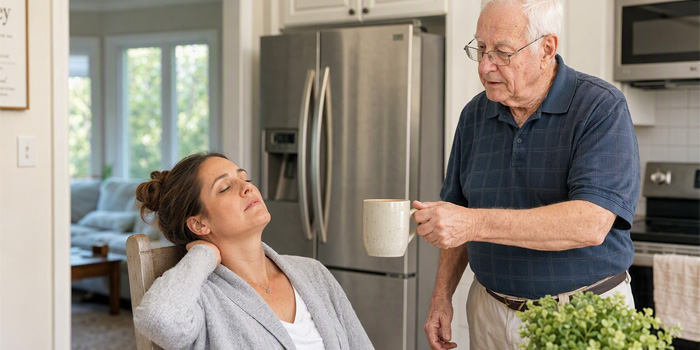
August is National Wellness Month, and we’re marking it with a three‑part series designed to support families caring for seniors. In Part One, we introduce the Monthly Wellness Check‑In — a simple ritual for noticing early changes in daily life. Part Two focused on caregiver wellness and the habits that prevent burnout before it starts. Part Three explores small home‑environment adjustments that make life safer and calmer for everyone. If you’re reading this entry out of order, feel free to revisit the earlier posts to follow the full wellness arc.
Caregiver burnout rarely arrives suddenly. It builds quietly, through small moments of exhaustion, emotional labor, and constant decision‑making. National Wellness Month is a reminder that caregivers deserve wellness just as much as the people they support.
But “self‑care” advice often misses the mark. Caregivers don’t need spa days or scented candles. They need habits that actually reduce strain.
Here are three that work.
1. Micro‑Resting: The 90‑Second Reset
Caregivers rarely get long breaks, but they do get micro‑moments — waiting for water to boil, standing in a doorway, pausing before a task.
Micro‑resting turns those moments into recovery.
A 90‑second reset might include:
- Closing your eyes and breathing slowly
- Stretching your hands or shoulders
- Letting your mind go blank instead of planning the next task
These tiny resets prevent the “stacking effect” — when small stresses accumulate into overwhelm.
2. Boundary Scripts: Reducing Emotional Labor
Caregivers often carry the emotional weight of keeping everyone calm, informed, and reassured. Boundary scripts lighten that load.
A boundary script is a pre‑written phrase you use when you need to protect your time, energy, or focus.
Examples:
- “I can help with that after lunch, not before.”
- “I’m not able to take that on today, but I can revisit it tomorrow.”
- “Let’s keep today simple — one thing at a time.”
Scripts reduce the emotional effort of saying no, and they prevent guilt from creeping in.
3. Environmental Smoothing: Removing Daily Friction
Small home adjustments can dramatically reduce caregiver stress.
Examples include:
- A dedicated “drop zone” for keys, glasses, and hearing aids
- A two‑lamp lighting upgrade to reduce evening strain
- A simplified kitchen layout that reduces repetitive searching
- A “quiet corner” that helps both caregiver and senior decompress
Environmental smoothing is wellness through design — not decoration.
Quirks That Make These Habits Stick
- The 2‑Minute Kitchen Reset: Clear one counter, not the whole room.
- The 5‑Item Stress Inventory: Identify five recurring stressors and remove one per week.
- The “No Apology” Script: Practice saying what you need without adding “sorry.”
Caregiver Wellness Is Family Wellness
When caregivers feel steadier, families function better. These habits aren’t dramatic, but they prevent burnout before it starts and make caregiving sustainable.