
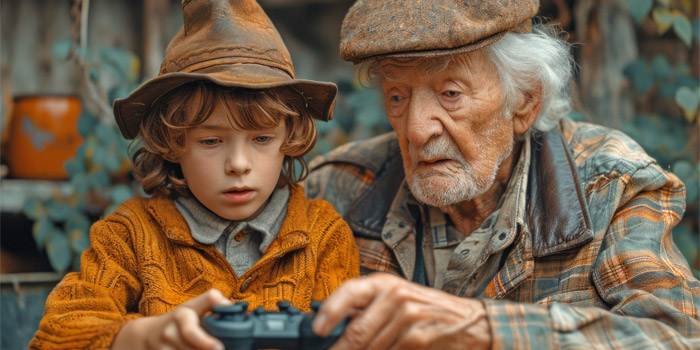
When people talk about “brain health,” they usually picture crossword puzzles, memory apps, or solo brain‑training games. Those tools have their place, but they miss something essential: the human brain is wired for connection. For older adults — especially those aging in place — one of the most powerful ways to build cognitive reserve isn’t solitary mental exercise. It’s intergenerational engagement.
When seniors interact with younger generations, something remarkable happens. They’re not just remembering facts or solving puzzles. They’re communicating, adapting, storytelling, negotiating, laughing, and responding to unpredictable ideas. That combination lights up more of the brain than any worksheet ever could.
Why Intergenerational Play Works
Cognitive reserve is the brain’s ability to stay resilient even as aging or illness creates challenges. It grows through novelty, complexity, and meaningful engagement — all things children and teens naturally bring to the table.
Intergenerational play strengthens:
- Attention and focus
- Working memory
- Language skills
- Emotional regulation
- Social confidence
- Problem‑solving
And unlike traditional “brain games,” these interactions feel natural, not clinical.
Co‑Op Video Games: Strategy Meets Connection
You don’t need fast reflexes to benefit from gaming. Many cooperative games require communication, planning, and shared decision‑making — perfect for seniors and grandkids playing together.
Think:
- Simple puzzle‑solving games
- Farming or building games
- Adventure games where players explore together
The senior brings patience and perspective. The child brings curiosity and quick thinking. Together, they create a cognitive workout disguised as fun.
Storytelling Circles: Memory With Purpose
Children love stories. Seniors have a lifetime of them.
A storytelling circle — in person or over video — invites seniors to share experiences while kids ask questions, react, and connect the dots. This activates:
- Long‑term memory
- Language fluency
- Emotional processing
- Social engagement
It also gives the senior a sense of purpose: my stories matter to someone.
Digital Escape Rooms and Trivia Nights
Virtual escape rooms and trivia games are surprisingly effective for seniors who enjoy puzzles but need social motivation. These activities require:
- Teamwork
- Pattern recognition
- Verbal communication
- Flexible thinking
A digital escape room is simply an online puzzle game where players work through clues together on a shared screen, often hosted on platforms like Google Forms or Genially, with popular examples including the Harry Potter Digital Escape Room created by a public librarian.
They’re also accessible for those who can’t leave the house. A tablet and a Zoom link are all it takes.
Emotional Resilience: The Hidden Benefit
Intergenerational play doesn’t just build cognitive reserve — it strengthens emotional resilience. Seniors who engage with younger people often report:
- Reduced loneliness
- Increased optimism
- Stronger sense of identity
- Reduced anxiety
- Better mood stability
Kids benefit too. They gain patience, empathy, and a deeper understanding of aging.
The Concept
Cognitive health is not only about keeping the mind sharp; it is also about staying connected. Intergenerational play gives seniors a joyful, meaningful way to build brain resilience while strengthening important relationships. Whether through a shared video game, a storytelling session, or a virtual puzzle night, these moments offer something no app can replace: a human connection that keeps the brain engaged.